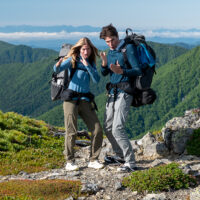
If there’s one thing we’ve learned on Hokkaido so far, it’s that making plans and keeping plans are two very different things.
After spending a few days in Shari, we should have been hiking up Mount Shari. But just like the first mountain on our route, our second mountain was closed for the coming week. Disappointed and frustrated, we spread out the maps once again and started looking for another plan. Luckily, that feeling didn’t last long.
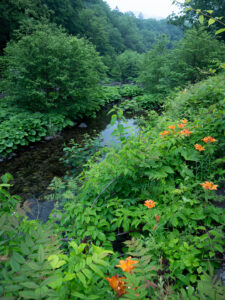
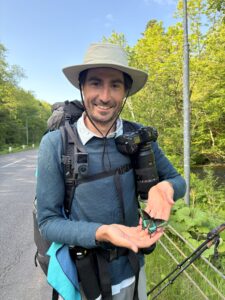
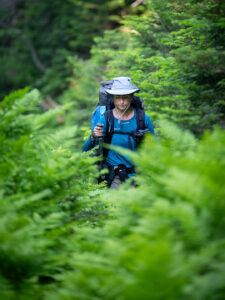
As soon as we entered the forest-covered hills, surrounded by lush green ferns and dense vegetation, our attention shifted back to what was right in front of us. One of the things we get most excited about are insects, reptiles and amphibians, and there seemed to be an endless supply of them. We were constantly amazed by the colours of the butterflies, the number of salamanders in a single pond, and the strange-looking insects hiding along the trail. It felt like being children discovering nature for the very first time.
The route gradually led us towards Mashu-Akan National Park. After many kilometres of tarmac and gravel roads, we finally found real hiking trails again. We weren’t the only ones using them. Between the deer tracks and fox droppings, we spotted something much larger. A pile far too big to belong to a fox. A bear had passed this way before us.
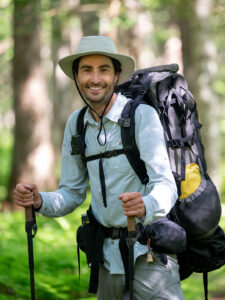
Our hiking days are slowly finding their rhythm. We wake up early because the sun rises before 4 a.m. The first ten kilometres usually feel easy. Then the hunger arrives and we can literally feel the energy draining from our legs. After a second breakfast, we’re fully charged again and ready for the next stretch. Up to twenty kilometres things go smoothly. After that, the aches begin. During this section we walked more than 30 kilometres for six consecutive days. That was challenging, especially with blisters that never really get a chance to heal when you keep walking every day. It also reminded us that a little more training before leaving home might not have been a bad idea. Still, every week we feel ourselves getting stronger.
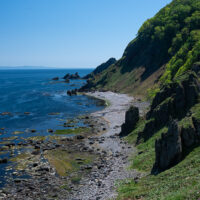
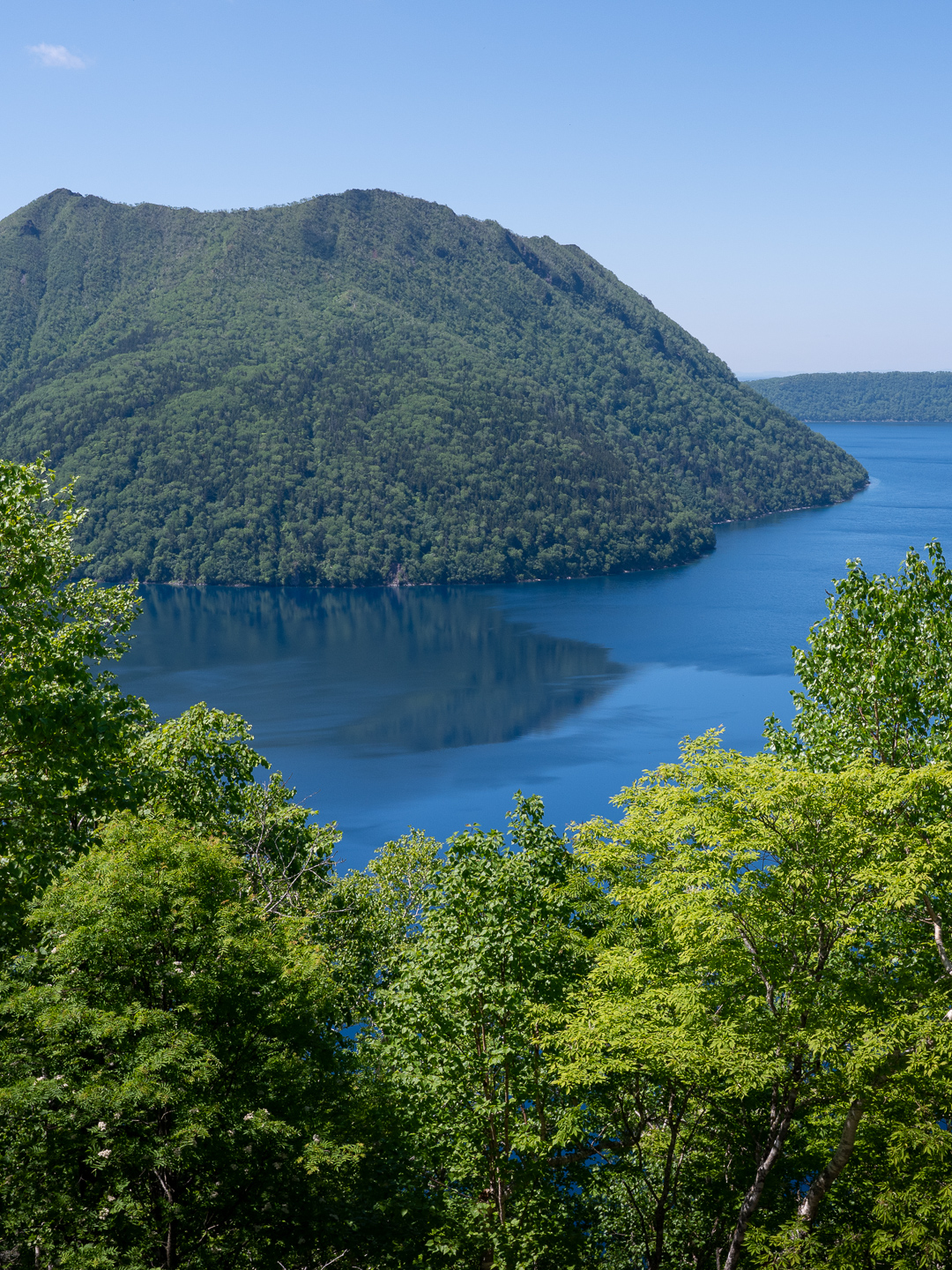
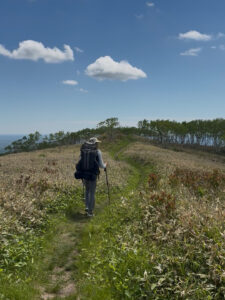
The small trails continued through endless bamboo-covered forests until we reached Lake Mashu. From there we followed the crater rim, enjoying views in every direction. The deep blue lake lay below us, surrounded by forest, while rolling hills covered in bamboo stretched out ahead. On the other side, the landscape suddenly changed into the flat, neatly organised farmlands that Hokkaido is known for. The weather was excellent, with temperatures climbing close to 30°C and the exposed ridge offered a welcome breeze that helped cool us down.
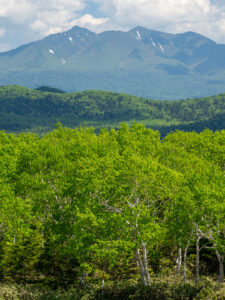
As we continued south, the landscape changed once again. We were approaching Mount Io, known in Japanese as Io-san, an active volcano. The volcanic activity creates a completely different environment, with unique vegetation and steaming ground. We tried to follow a smaller trail towards the volcano, but the deer had clearly created far more paths than hikers. Every direction seemed possible. We pushed through dense low pine forest for a while, collecting large amounts of sticky resin on our clothes, before admitting defeat and returning to the main path. Mount Io is unlike anything else we have seen on this journey so far. Steam rises from cracks in the ground and pours from the hillsides. Hot water bubbles beneath the surface, sulphur fills the air, and the constantly shifting clouds of steam make the whole landscape feel alive.
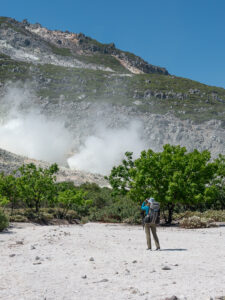
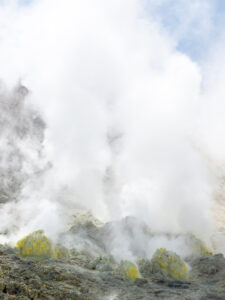
By the end of the day, we were exhausted from both the kilometres and everything we had seen. Finding a place to camp turned out to be more difficult than expected. The landscape had changed into farmland, leaving few options for a tent. We headed towards a river, hoping to find both water and a campsite, only to discover that the riverbed was completely dry. Eventually we asked for help at a nearby dairy farm. A grandfather and his granddaughter first tried to find a spot for us near the house. Soon the rest of the family became involved. In the end, the mother and daughter drove us to a nearby village where they knew a suitable place to stay. That night we camped on a golf course. There is a first for everything.
The following evening we reached Lake Kussharo and experienced another side of Japanese camping culture. Large family tents filled the campsite. Campfires burned everywhere. People grilled food, relaxed with friends and illuminated their camps with incredibly bright lights. For anyone sleeping in a thin Dyneema tent, it was quite an experience. Fortunately, our eye masks from our summer walks in Lapland proved useful once again.
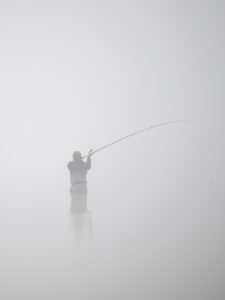
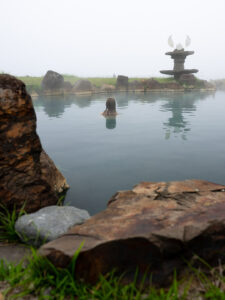
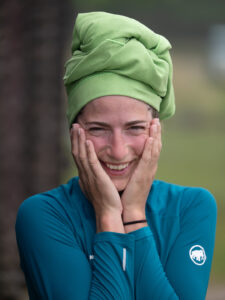
Early in the morning we rise and look out over Lake Kussharo, covered in a thick layer of mist. The campsite is quiet and serene as we silently pack our gear and leave. We have a plan for the morning: our first onsen of the trip. Not just any onsen, but an outdoor mixed onsen on the edge of the lake. As we approach, we notice a parking area and immediately feel a little disappointed. Apparently, other people had the same idea. We prepare ourselves for a crowded bath. But when we arrive, there is only one other person there: a man quietly sitting in the steaming water, completely absorbed in his own thoughts. The parked cars belong to fishermen. Through the mist we can barely make out their silhouettes standing motionless along the shore, their fishing lines disappearing into the lake. We slip into the water. The temperature is perfect. Beneath our feet, the stones are covered with soft algae that feel almost like velvet against the skin. Slowly, I can feel my muscles relaxing. The tension in my shoulders from carrying a backpack day after day starts to disappear. My legs warm up and loosen, preparing themselves for another long day of walking. When we finally leave the onsen al warmed up, the cool morning air feels refreshing.