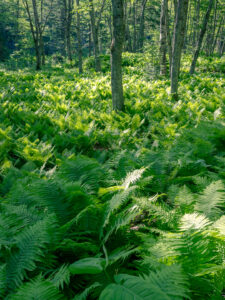
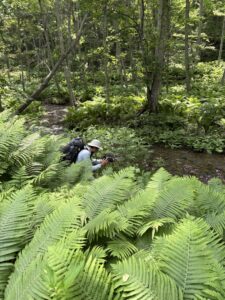
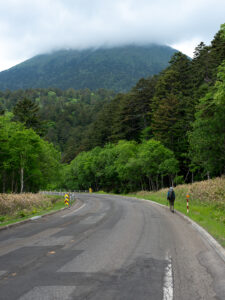
The trail treats us to an unexpected gift: a beautiful forest road we hadn’t even noticed on the map. Ferns line the path and for a while it feels as though we have the entire forest to ourselves. We walk happily, still carrying the relaxed feeling of the hot spring.
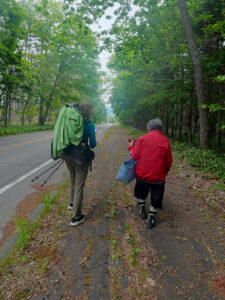
Eventually the forest gives way to tarmac again. That’s where we meet her.
A small elderly woman walks towards us. We exchange greetings and continue on our way, but she starts talking. We catch a few familiar words. Ocha. Tea. Gohan. Rice. Food. At first we think she’s simply making conversation. Then it slowly dawns on us that she is offering us tea or perhaps lunch. When we respond enthusiastically, she immediately gestures for us to follow her. The funny thing is that she had been walking in the opposite direction. Without hesitation she turns around and starts leading us back the way she came. We adjust our pace to hers. Her small steps are slow and careful. Our legs are probably twice the length of hers and certainly much younger. As we walk, she keeps talking. We understand only fragments. Holland. And something that sounds like tjuropu. After a while I realise she is probably talking about tulips. Soon we arrive at her house. She guides us inside and points firmly towards the sofa. The living room is cosy and full of character. A display cabinet is packed with ornaments and small treasures collected over a lifetime. Old kettles and cast-iron pots stand near the stove. We sit quietly, looking around, wondering what exactly is happening. Our host disappears into another room. A few moments later she returns carrying bananas. Then the kettle goes on. Then rice appears. Then vegetables. Then miso soup. Then pickles. Then tomatoes. Then cookies. Then coffee. Then apple drink. And a lot of refills on the tea.
Every time we think the meal is complete, she returns with something else. She carefully explains the name of each dish in Japanese and enthusiastically encourages us to eat. When she notices me adding dressing to a salad, she immediately gestures for more. A little more. And then a lot more. Only when she is satisfied does she nod approvingly. We do our best to tell her that everything is delicious. “Oishii.” That word she understands perfectly.
The conversation continues through a mixture of gestures, occasional English words, Japanese vocabulary we happen to know, and a translation app. She tells us about Holland, tulips and windmills. We show photos from our hikes. Every now and then she laughs, disappears into another room and returns with yet another surprise.
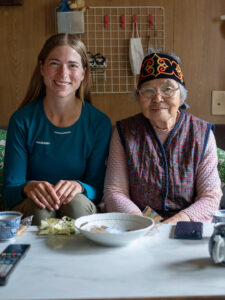
At one point she leaves and comes back wearing a traditional headband. She proudly states she is Ainu. Part of the indigenous people of Hokkaido. Proudly she sits down next to me for a photo. Then she takes off the headband and places it on my head. “Puresento,” she says. At first I think she only wants a photo, but no. She repeats it again and again. The headband is meant for me. I carefully hold it in my hands, touched by a gift from someone we had met only a few hours earlier. Meanwhile she calmly resumes knitting. Every now and then she holds up her work to show us how the sock is progressing. Time passes. The food is finished. The tea cups are empty. We are still sitting on the sofa, enjoying the moment but slowly becoming aware that we should continue hiking. Yet neither of us knows how to leave. How do you politely say goodbye to someone who has welcomed two strangers into her home, fed them like family, shared her culture, and gifted us something so personal?
It is one of those moments that makes walking through Japan feel special. We got our own piece of unexpected trail magic.
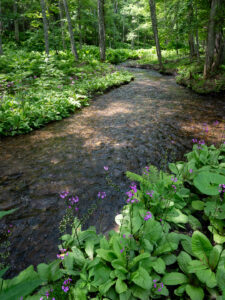
After she made sure we understood that if she still is in good health we should come back, we say our goodbyes. We pick up our trail. What started as soft forest paths has slowly turned into something rougher. Fallen trees block the way. We climb, crawl and push through dense bushes. Every step adds more resin to our clothes. By now we look like we’ve been on the road for a year straight. Everything sticks. Everything smells. At least we’re convinced it will keep the bears away. No animal could possibly miss us coming. The path we are taking is definitely worth it. A forest road along a stream of water, the sides covered with ferns and bright purple flowers. And nobody seems to be coming here. This is one of the reasons why we hike, you get to see so much.
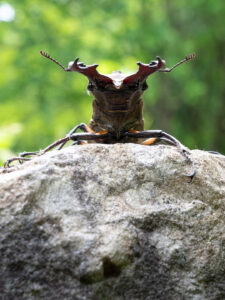
At night, the forest becomes more alive. I wake up when Roel opens the tent. He tells me he has been hearing movement in the bushes for a while and is ready to go check, with a light in one hand and the bear spray in the other. I must have slept through it completely, not a nice thing to think about. I sit still and listen. The rustling continues. Then, suddenly, a sharp, high-pitched scream cuts through the night. Not the deep sound you might expect from a bear. Something else entirely. We stay awake for a long time after that, until the forest eventually quiets down again. Another night “protected” by the very friendly, very loud deer.
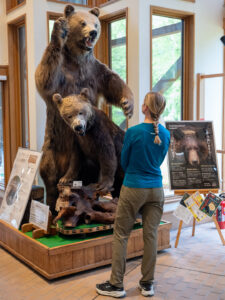
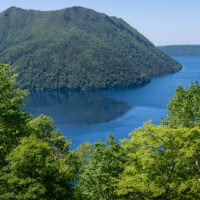
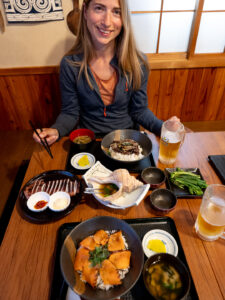
The next days lead us further along asphalt roads towards Akankohan, a small town with strong Ainu history that has now become more tourist-oriented. We head to the campsite hoping for a shower this time. No luck. Once again, I find myself imagining what we must look like: like Sims characters with the green plumbob floating above our heads, desperately gesturing that they need hygiene. Luckily, we only have to wait one more night before the onsen opens again. And when it does, it feels like a reset button. Hot water, steam, clean skin, relaxed muscles. After days of hiking, it feels almost unreal. Refreshed, we spend the afternoon by the lake, eating, resting in the sun and slowly feeling rest again. In the evening, we enjoy a meal that feels like a celebration: venison, salmon, squid and whelk, each dish arriving one after another as if the region itself is feeding us. And the Ainu hosts show the hospitality and kindness they are known for.
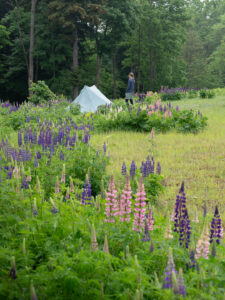
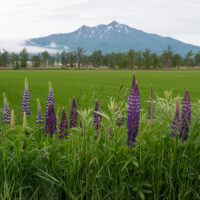
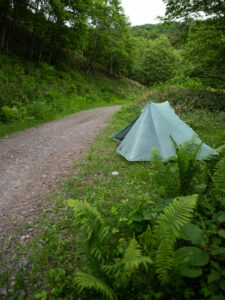
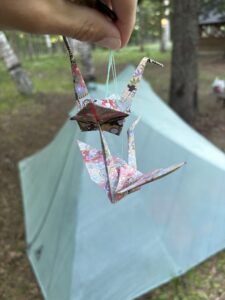
The first night in Akan, Roel found a perfect spot in a field of lupins. Curious deers come to inspect our tent. This time in daylight, so we hope they wont be screaming at the tent this night. The next night we stayed at the campsite, so we could leave our stuff during our resting day in Akan. When we come back to the campsite, the woman from the reception gestures excitedly towards us. She says something about origami. We are confused. Our tent? Origami? It doesn’t quite make sense. Our Dyneema shelter is lightweight and slightly chaotic in shape, but not exactly folded like paper cranes. When we arrive back at the tent, we find two carefully folded paper cranes waiting for us. A small, quiet gift left behind while we were gone. Moments like that keep appearing along the way. Strangers offering water. People stopping to check where we are going. Others handing us drinks and snacks or warning us again and again about bears in the area. There is a constant undercurrent of attention and care, even from people we meet only briefly. So much kindness!
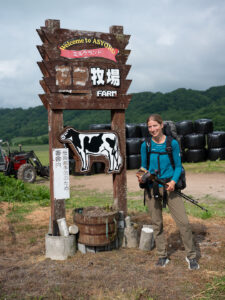
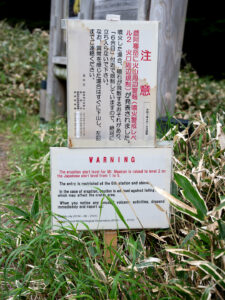
Eventually we make our way towards Mount Meakan, an active volcano we are eager to cross on our route to the next campsite. We start the climb full of energy, excited for the trail ahead. But once again, the mountain has other plans. The volcanic activity is too strong. The path across the crater is closed, and there is no alternative route over the top. We are forced to turn back.
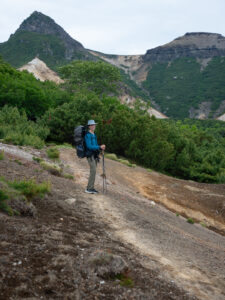
Back in Akan, we realize that continuing on foot would mean a day of more than fifty kilometers. Neither of us has the energy for that, especially with feet that are already protesting every step. We decided to hitchhike. It works almost immediately. A kind driver picks us up and, by coincidence, turns out to be from Tsugaru, a place we will pass through later in the autumn. We exchange names and promises to meet again when we arrive there.
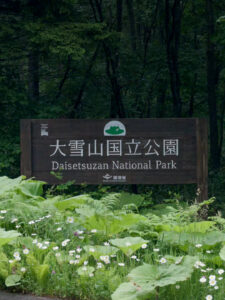
A few more walking days follow. More campsites. More closed gates. More detours than straight lines. Until we finally reach Nukabira. From there we take the bus into Asahikawa to take care of practical things: resupply, planning, and most importantly, new shoes. The old pair has lost most of its grip. The next section ahead will take us into Daisetsuzan, the rugged mountain range of Hokkaido.
While Roel works on editing our second video, I spend my time mapping water sources, checking difficult sections, planning campsites, organizing food for a week and constantly refreshing the weather forecast. Everything now revolves around preparation. One more pair of shoes and then (finally!), we will head into the mountains.