Our timing this week couldn’t have been much worse.
After leaving Rausu, we wanted to stay at the onsen campground. Soaking in the outdoor baths sounded like the perfect reward after the Shiretoko hike. Unfortunately, the campsite wouldn’t open for another two days. We spoke to people at the town hall and the nature centers, hoping for an exception, but no luck. In Japan rules are there to be followed.
We asked around at a few hotels until one friendly clerk offered us a spot on the grass field next to the hotel. What looked like a quiet place to spend the night turned out to be a gathering place for deer. As soon as darkness fell, they started making loud squeaking and calling sounds around our tent. We kept waking up to the noise.
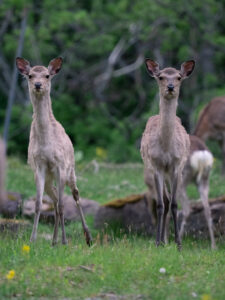
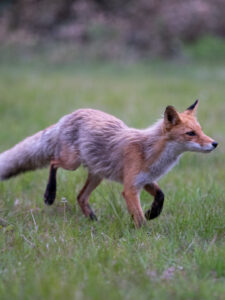
When we finally fell asleep, Roel suddenly shook me awake. The fox we had seen earlier that evening had raided our vestibule. Our shoes were gone! The fox wasn’t scared of us at all. While we gathered our belongings, the deer around the tent kept calling into the night. Luckily, our shoes and gear were scattered within about 25 metres of the tent. The fox hadn’t found anything worth stealing. Every evening we hang our food in a bear bag far away from camp and never eat near the tent.
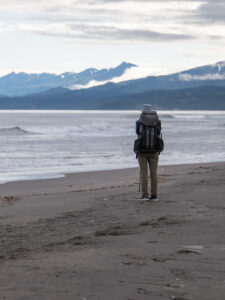
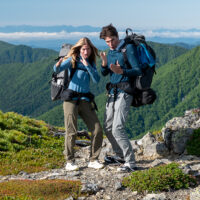
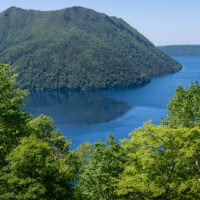
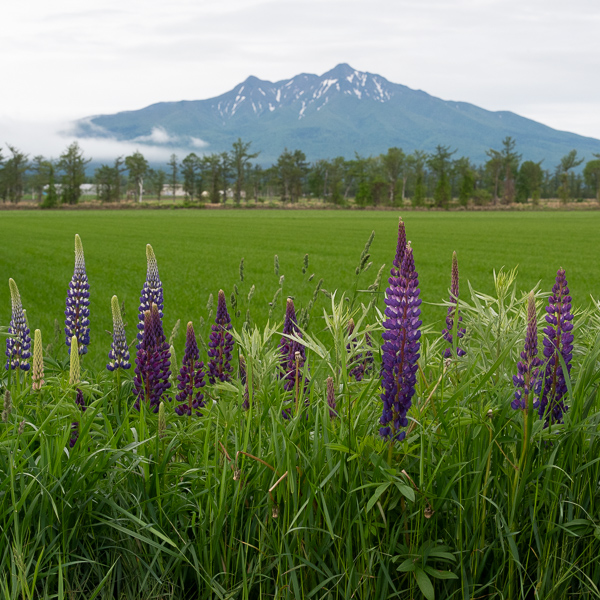
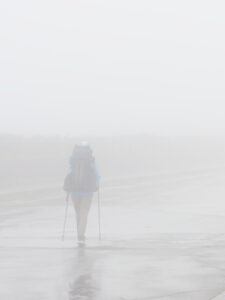
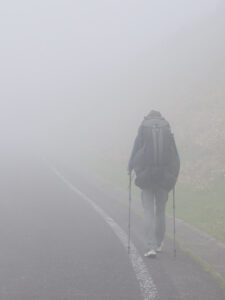
Tired after another restless night, we started hiking over the Shiretoko Pass. Like I said, our timing was bad this week. Not only was the campsite closed, but an entire mountain was too. We had hoped to climb Mount Rausu, but after a bear attack last year the trails remain closed until next month. Every hiking trail in the area was off limits. We told ourselves the road would be worth it anyway. Many people drive the pass for the views of Mount Rausu and Shiretoko National Park. Unfortunately, a thick blanket of mist hung over the road, hiding every view. The whole way we called out greetings to any bears that might be nearby. In the fog, it felt important to let them know we were coming. We didn’t see a single bear. On the one hand that was probably a good thing. On the other hand, we couldn’t help feeling a little disappointed.
On the other side of the mountain, the sky finally cleared. We sat down in a parking area and watched people drive by. Almost everybody seemed surprised to see us sitting there with our backpacks. Some stared openly and a few actually dropped their jaws. We enjoyed the reactions and they keep coming every time we hike on the roads. Eeeh, No car? It is a weird phenomenon here in Japan.
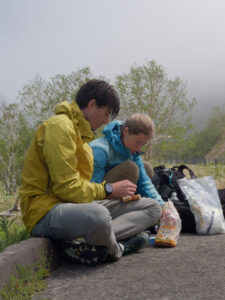
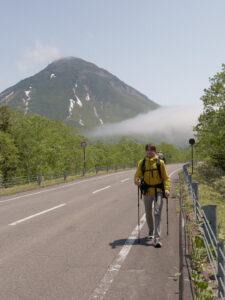
After 30 painful kilometres, made hard by the blisters and stiff muscles from all the climbing, we arrived at a campsite in Utoro. The couple running it were incredibly welcoming and did their best to explain everything to us. We found a sunny spot, took off our shoes and let our feet recover. The next day became a rest day before continuing towards Shari. After several days of hiking, a for us wel known kind of hunger takes over. No matter how much you eat, it never feels like enough. We spent the day recovering, cooking with fresh vegetables and eating almost constantly. The convenience stores in Japan are dangerous in the best possible way. Hot meals, cold meals, sweet snacks and savoury snacks. There is always something tempting waiting on the shelves.
The following day we continued along the road. I secretly hoped we might spot another bear, but much of the route was lined with high fences and even bear traps. It all felt a little contradictory. Bears are a symbol of Shiretoko. They appear on signs, logos and advertisements. At the same time, visitor centres and information boards constantly warn about the dangers of meeting one. The message is clear: stay out of the mountains and make sure you never see one. For the bears, that is probably a good thing. They have a huge area to roam undisturbed. It’s just a shame that it leaves us walking on asphalt instead.
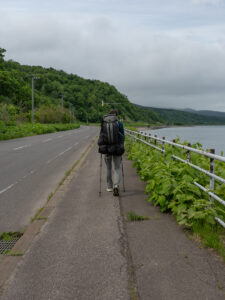
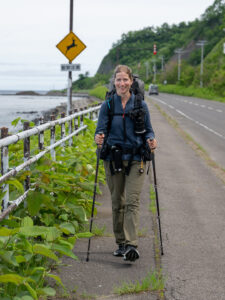
Another 40 kilometres brought us closer to Shari. Along the way we camped between fields freshly planted for the new season. It was a very different landscape from the rugged coastline and mountains we had just left behind. When we arrived in Shari our timing was still off. All the budget hotels were fully booked.
Instead, we ended up at a rider house, our second one on this journey, a simple place with a small cottage and a great communal space where we could work on our videos and blogs. There was also a large kitchen. After cooking outdoors for days, it felt almost luxurious to prepare dinner without constantly wondering whether a bear might smell it and decide to join us.
We shared the space with a group of Japanese motorcyclists. All men travelling solo, but they tended to find each other naturally in the shared spaces. Sometimes exchanging a few words and mostly just sitting in comfortable silence. Occasionally, if someone knew a bit of English, they would engage us with polite curiosity. At one point we overheard them talking about ハンドクリーム (hando kurīmu). And the way it became a serious topic of conversation felt unexpectedly funny for a group of motorcyclists. They are different from our idea of bikers. They would start the day reading manga, slowly waking into motion. The rest of the day they sat in de communal area eating or falling asleep on the sofa. They were greatly organised: gear sorted into small bags and baskets, items arranged with care, routines followed in a steady unspoken order. Watching them, we felt almost comically unstructured in comparison with our gear spread across the table. Never thought I would be messier than a biker.